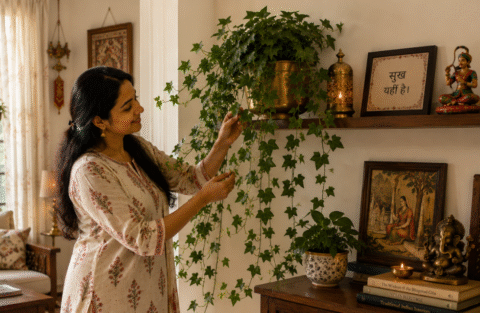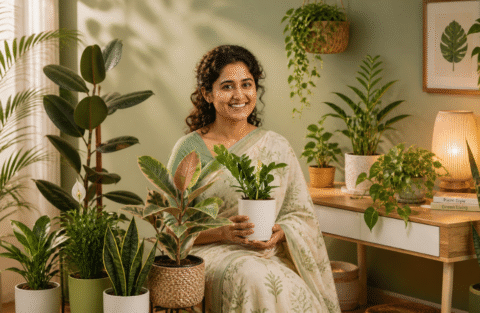


Quick Answer - The best indoor summer plants for Indian homes include Areca Palm, Snake Plant, Peace Lily, Money Plant, Monstera Deliciosa, Syngonium, Aglaonema, Lucky Bamboo, Boston Fern, and Aloe Vera. These plants thrive in India's warm, humid summers, purify indoor air, regulate humidity, and create a refreshing living environment — without consuming any extra electricity. |
When the Indian summer arrives with its blazing 40°C afternoons and stifling pre-monsoon humidity, most of us reach for the AC remote without a second thought. But what if your home could breathe a little easier — naturally?
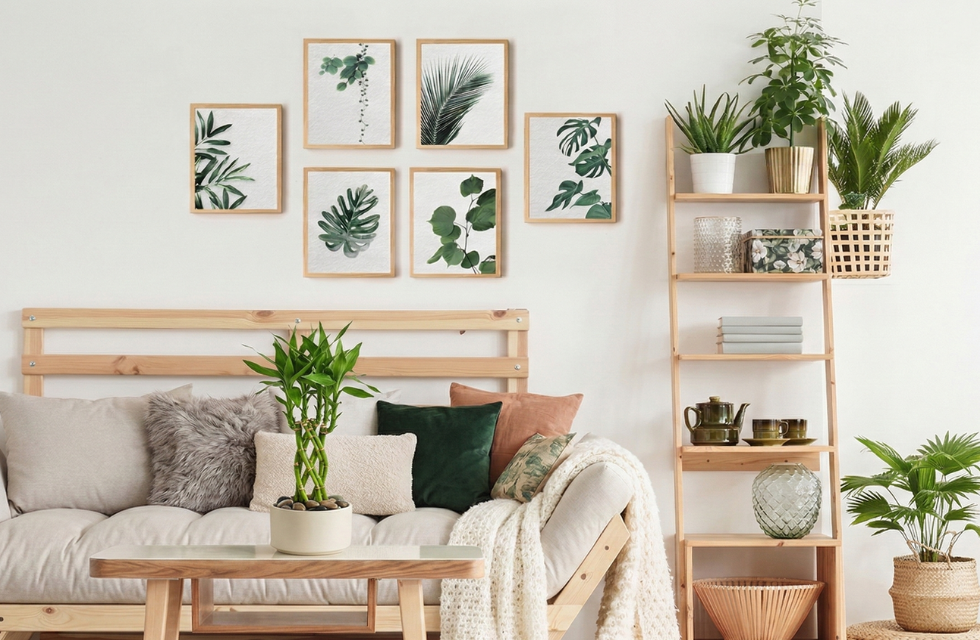
Indoor plants have been transforming urban living spaces across India for good reason. Beyond their undeniable visual appeal, the right indoor house plants actively improve your home’s air quality, regulate humidity, reduce stress, and create a psychologically cooler atmosphere — even when the thermometer refuses to cooperate.
In cities like Kolkata, where pre-monsoon heat combines with intense humidity, or in Delhi, where dry scorching Loo winds make stepping outside deeply uncomfortable, indoor plants offer a practical and beautiful retreat. They work quietly in your living rooms, bedrooms, office corners, and kitchens — purifying the air you breathe and adding life to otherwise concrete-dominated spaces.
This guide covers everything you need to know about indoor summer plants for Indian homes — from choosing the right varieties and understanding their care needs, to protecting them during heat waves, troubleshooting common problems, and building a thriving indoor garden that stays fresh all season. Whether you want the best indoor plants for living room display or quiet corner plants for an office, you’ll find complete answers here.
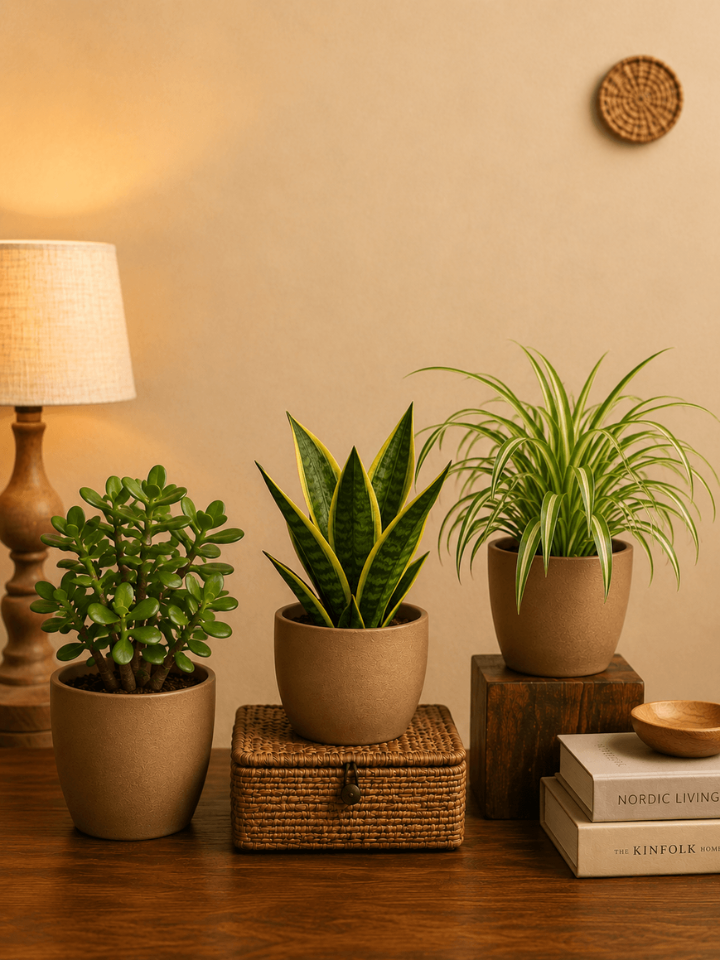
Air Purifying Indoor Plants Combo
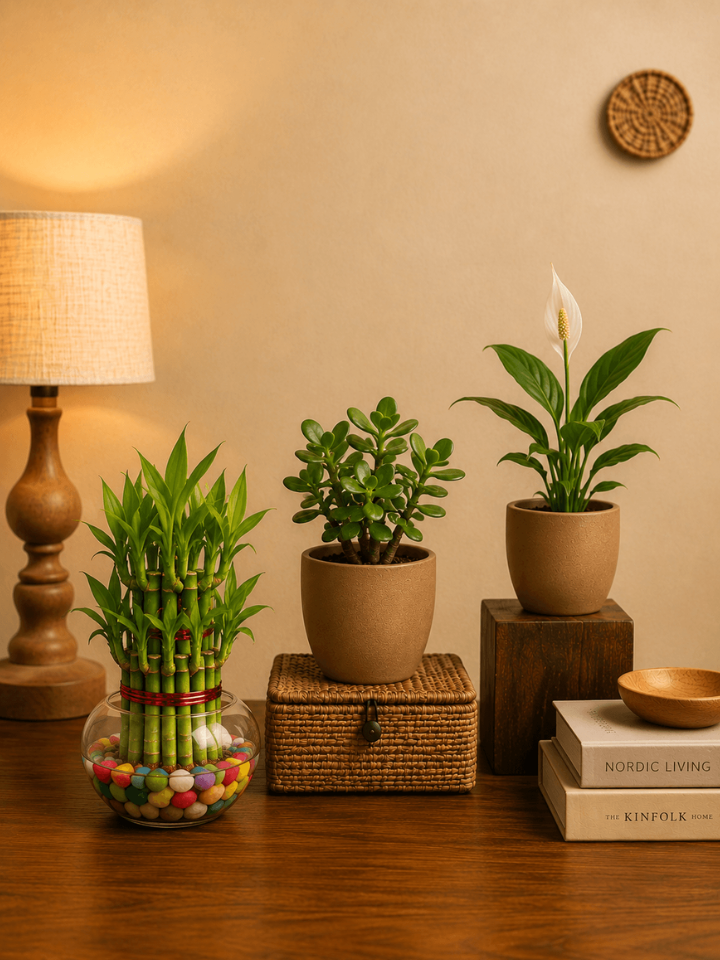
Set of 3 Vastu Plants
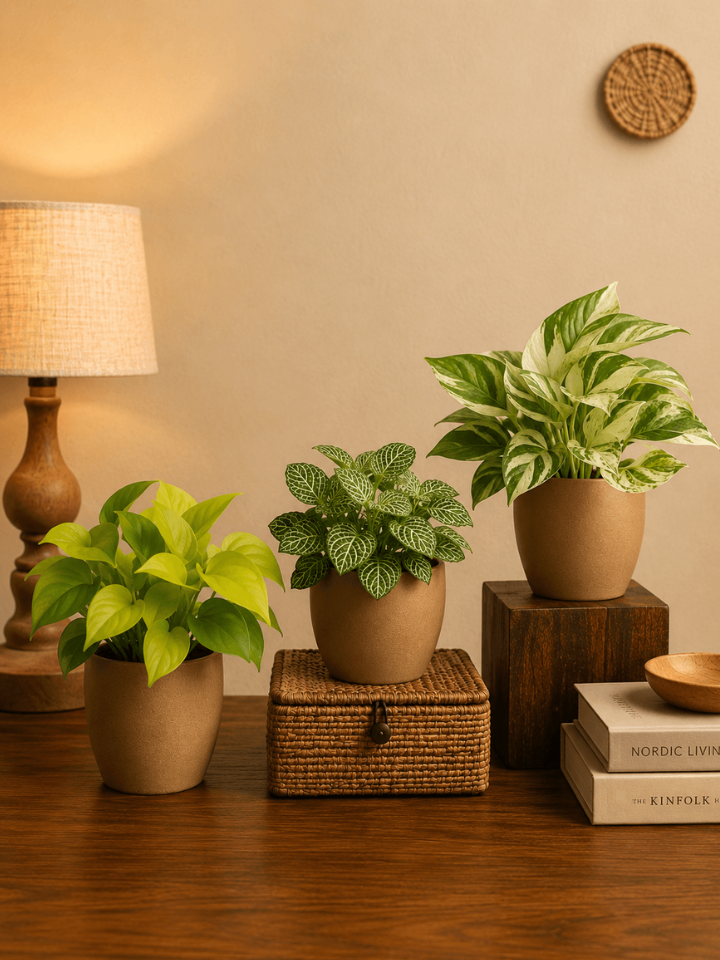
Combo of 3 Minimalist Plant Set
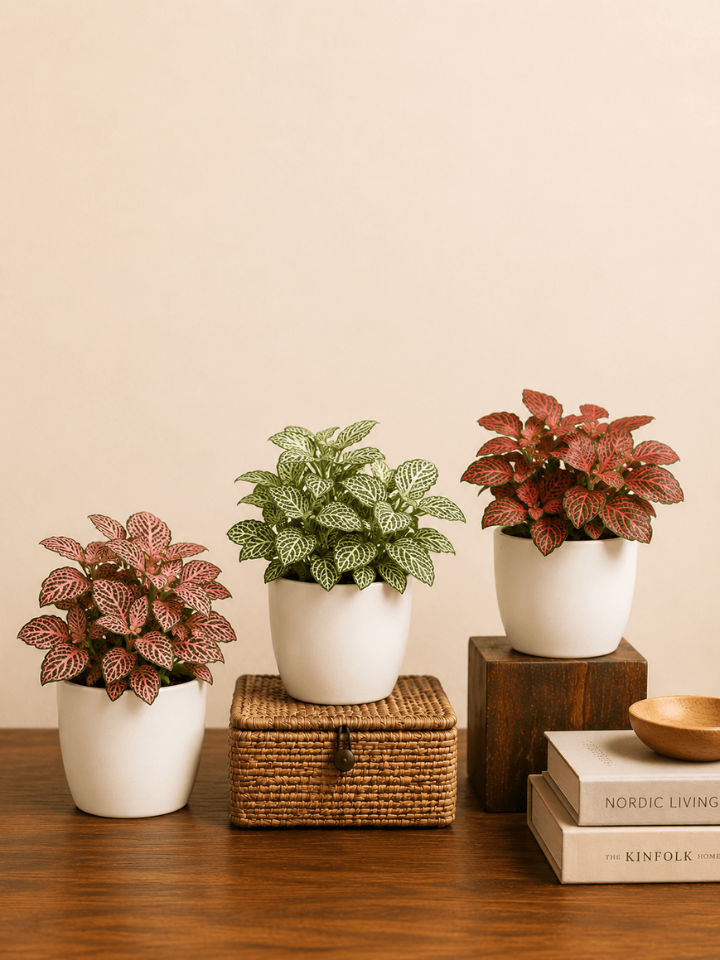
Set of 3 Indoor Plant Combo – Fittonia
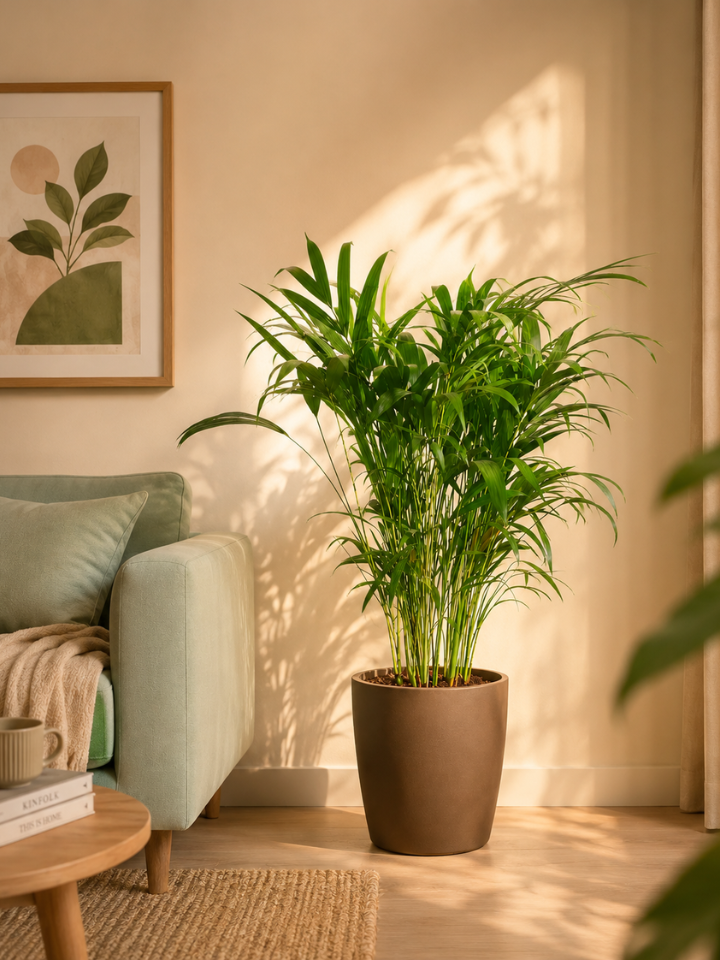
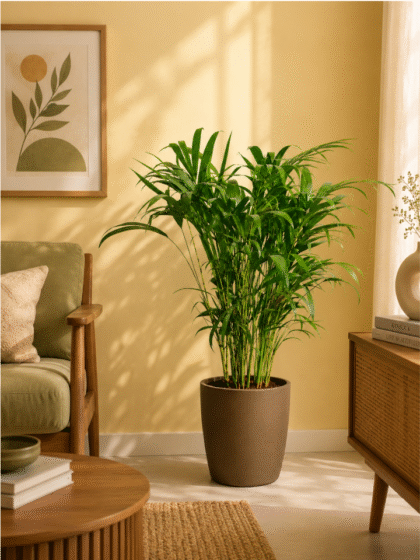
Areca Palm Plant (XL)
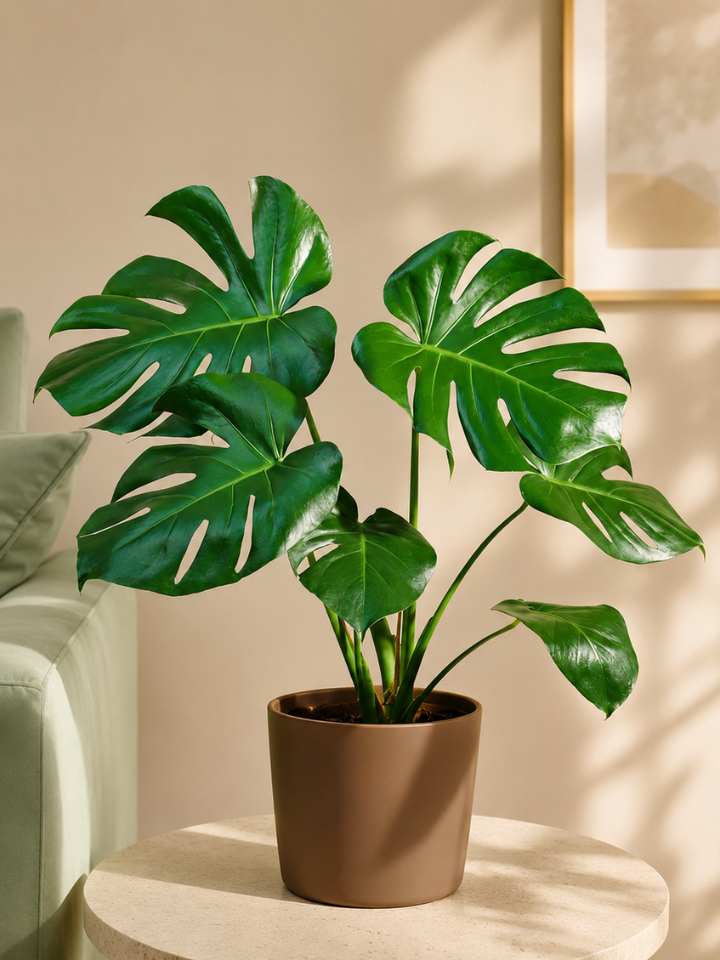
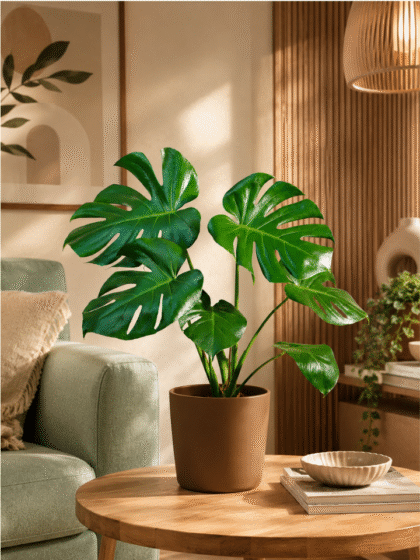
Monstera Deliciosa Plant (XL)
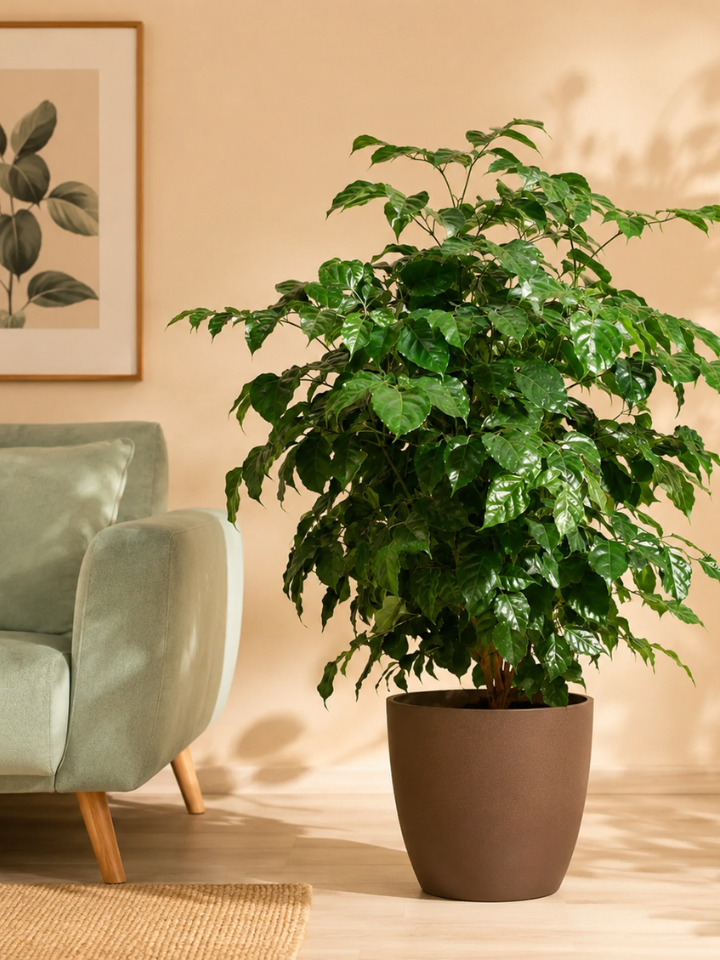
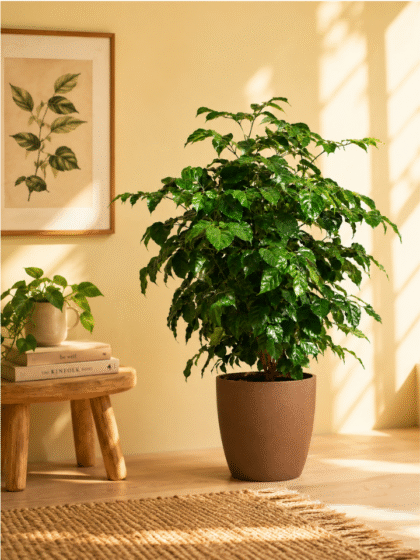
China Doll Plant (XL)
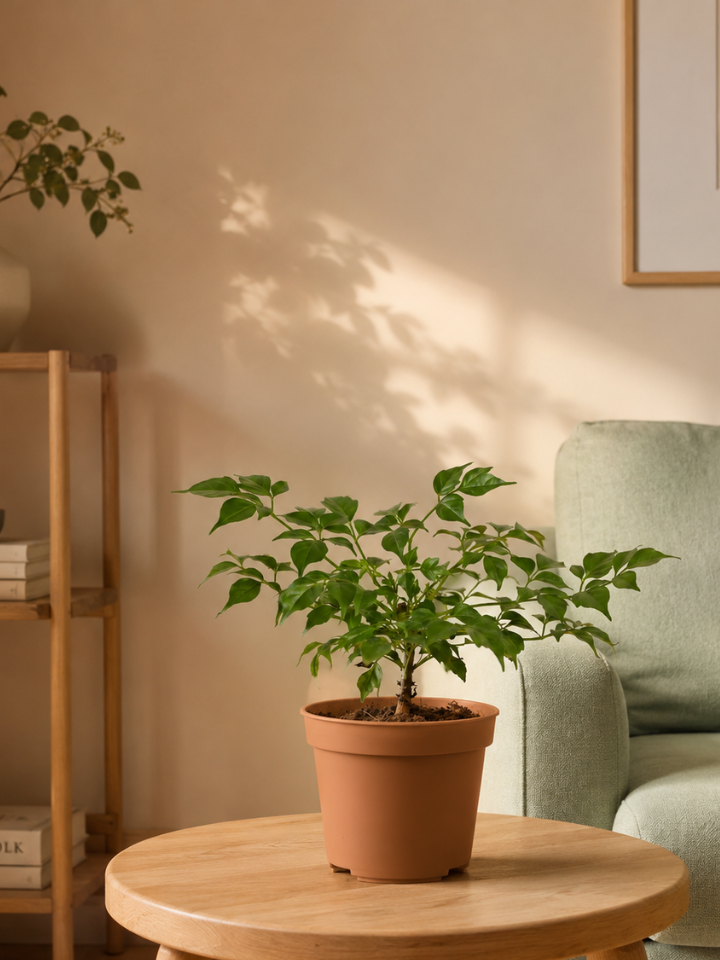
China Doll Plant (Small)
Why Indoor Plants Matter During Indian Summer
India’s summer is not a gentle warm season — it is a full-scale climatic challenge. Across different regions, the nature of summer heat varies dramatically. In West Bengal, including Kolkata, April and May bring oppressive heat combined with high humidity, making every degree feel heavier. In Rajasthan and Delhi, dry Loo winds push temperatures past 45°C. Coastal cities like Mumbai and Chennai face humidity levels hovering near 80–90% through peak summer afternoons.
Most urban Indians now spend 80–90% of their time indoors during peak summer months. Sealed AC rooms maintain comfort but create invisible problems — stale air, gradually rising CO₂ levels, and indoor pollutants from furniture off-gassing, paints, cleaning products, and cooking byproducts accumulate with nowhere to escape.
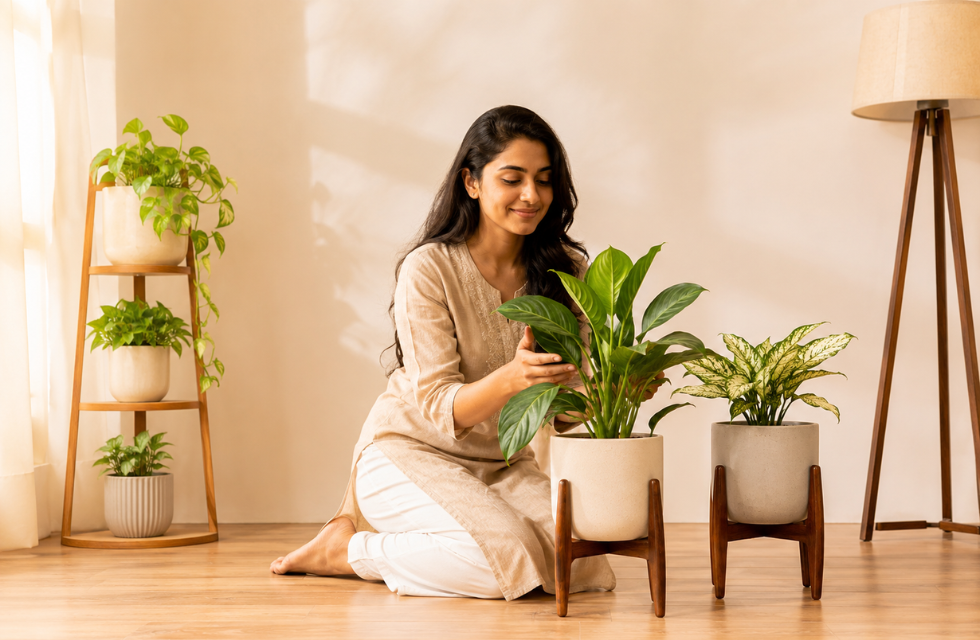
Indoor plants address all of this simultaneously. They are not just decorations — they are active biological systems that continuously filter, refresh, and humidify indoor air. For apartment dwellers across Indian metros who have limited outdoor garden space, a well-chosen selection of indoor house plants is the most accessible way to bring nature’s benefits into daily life.
💡 Expert Insight: A 2019 study published by the American Society for Horticultural Science found that people working in plant-rich indoor environments reported 15% higher well-being scores and 6% higher productivity compared to those in plant-free spaces.
The Science Behind Plant-Based Cooling
How Plants Regulate Indoor Temperature
Plants do not lower room temperature in the way an air conditioner does. What they achieve is something more nuanced — they reduce perceived temperature and thermal discomfort through a process called transpiration. Just as humans sweat to cool down, plants release moisture through tiny pores on their leaves called stomata. This process releases water vapour into the surrounding air, and in a well-planted room, this moisture addition can make the space feel 2–4°C cooler without any energy consumption whatsoever.
Research from the Royal Horticultural Society has consistently shown that rooms with multiple actively growing tropical plants maintain lower effective temperatures during peak heat hours than rooms without greenery. Larger-leaved plants like Monstera Deliciosa, Areca Palm, and Peace Lily are especially effective because their expansive leaf surface areas release considerably more moisture per plant.
Photosynthesis and Indoor Air Quality
Beyond cooling, indoor plants engage in photosynthesis throughout the day, absorbing carbon dioxide and releasing oxygen. In a sealed, air-conditioned room, CO₂ levels rise gradually as human respiration continues without natural air exchange. Plants counteract this meaningfully, maintaining fresher, more oxygen-rich air — which translates directly to better concentration, lower fatigue, and improved mood.
In a landmark study, NASA researchers found that certain houseplants can remove volatile organic compounds (VOCs) like formaldehyde, benzene, and xylene from enclosed spaces. These compounds are commonly emitted by furniture, paints, adhesives, and cleaning products in modern Indian homes and offices, making the air quality benefit of indoor plants highly practical rather than merely theoretical.
📌 Did You Know? A single medium-sized Areca Palm releases approximately one litre of water vapour into the air every 24 hours through transpiration — comparable to a small electric humidifier, but completely natural and electricity-free.
Complete Benefits of Indoor Plants During Indian Summer
Natural Air Purification
The air inside modern Indian homes can be significantly more polluted than outdoor air. Cooking smoke, incense, paint fumes, off-gassing from synthetic furniture, and limited ventilation during sealed AC hours all contribute to poor indoor air quality. Choosing the right indoor plants for better air quality is therefore not just a wellness preference — it is a meaningful health decision. Plants like Peace Lily, Snake Plant, and Areca Palm absorb these pollutants continuously, providing cleaner air throughout the day.
Natural Humidity Regulation
One of the most underrated summer benefits of indoor plants is their ability to replenish moisture in dry, AC-cooled air. Air conditioning removes humidity along with heat, leaving indoor air excessively dry — leading to dry skin, irritated eyes, scratchy throats, and static electricity in fabrics. Humidity-loving plants like Boston Fern, Peace Lily, and Areca Palm release moisture continuously through transpiration, naturally rebalancing indoor humidity to comfortable levels.
Stress Relief and Mental Health
Numerous psychological studies confirm that contact with nature — even the simple act of tending to and looking at indoor plants — reduces cortisol (the stress hormone), lowers blood pressure, and induces calm. For urban Indians who spend long hours in high-pressure environments, coming home to a green, living space offers genuine psychological restoration that no amount of material décor can fully replicate.
Better Sleep
Certain plants are particularly beneficial for bedrooms because they continue releasing oxygen at night, unlike most plants that switch to CO₂ production in the absence of light. Snake Plant, Peace Lily, and Aloe Vera are among the finest indoor plants for bedroom settings during Indian summer — maintaining fresher air through the night for deeper, more restful sleep even in the hottest months.
Aesthetic Value and Lifestyle Enhancement
There is something genuinely uplifting about waking up to living greenery in the middle of a harsh summer. Indoor plants bring colour, texture, movement, and life into otherwise static interiors. They transform balconies into lush summer retreats and living rooms into calming sanctuaries — making even the hottest Indian summer feel meaningfully more livable and comfortable.
Top 10 Indoor Summer Plants for Indian Homes
Best Plants for Your Balcony in Indian Summer
1. Areca Palm — The Natural Living-Room Humidifier
When it comes to transforming a warm Indian room into a tropical oasis, the Areca Palm stands in a class of its own. With its elegant arching fronds, abundant transpiration output, and tolerant nature, this plant is a go-to choice for living rooms and sitting areas across Indian homes of every size.
Property | Details |
Botanical Name | Dypsis lutescens |
Origin | Madagascar |
Light | Bright indirect light (east or north-facing window) |
Water | Every 3–4 days in summer; allow top 1 inch to dry |
Ideal Temperature | 18–35°C |
Humidity | Loves high humidity — ideal for coastal Indian cities |
Growth Rate | Moderate |
Typical Indoor Height | 4–7 feet |
Pet Safety | Non-toxic to cats and dogs |
Native to the rainforests of Madagascar, the Areca Palm has adapted beautifully to India’s tropical climate. Unlike many exotic houseplants, it actually thrives in warm, humid Indian summer conditions rather than struggling against them. In Kolkata, Mumbai, and other high-humidity cities, it grows vigorously with minimal extra care.
Summer Care Tips for India
- Position near a bright east or north-facing window for optimal filtered light without harsh afternoon rays
- In Kolkata’s pre-monsoon humidity, watering every 3–4 days is typically sufficient through summer
- In drier climates like Delhi or Nagpur, mist fronds daily or use a wet pebble tray beneath the pot
- Keep at least 4 feet from AC vents — cold, dry drafts cause characteristic brown leaf tips
- Feed with balanced liquid fertilizer (NPK 10-10-10) every 3 weeks during the growing season
💡 Expert Tip: Place a group of Areca Palms together in a room corner for maximum visual impact and enhanced humidity — clustered plants create a shared microclimate that amplifies both the cooling and air-purifying effect.
Common Mistakes to Avoid
- Overwatering during monsoon when outdoor humidity is already very high
- Allowing direct harsh afternoon sun to hit fronds, causing widespread leaf scorch
- Ignoring root-bound plants — repot every 2 years for continued healthy, vigorous growth
2. Snake Plant — The Indestructible Air Purifier
If you are looking for the most forgiving, adaptable, and practically indestructible indoor summer plant for Indian conditions, the Snake Plant deserves immediate attention. It thrives on relative neglect, purifies air throughout the night via CAM photosynthesis, and survives temperature extremes that would damage most other houseplants.
Property | Details |
Botanical Name | Sansevieria trifasciata (syn. Dracaena trifasciata) |
Origin | West Africa |
Light | Low light to bright indirect (extremely adaptable) |
Water | Every 10–14 days in summer — very drought tolerant |
Ideal Temperature | 15–40°C |
Humidity | Adaptable to any level |
Growth Rate | Slow to moderate |
Typical Indoor Height | 1–4 feet |
Pet Safety | Mildly toxic to cats and dogs |
Unlike most plants, the Snake Plant performs Crassulacean Acid Metabolism (CAM) — a special form of photosynthesis that absorbs CO₂ at night and releases oxygen in the dark. This makes it one of the best night-oxygen-producing plants for Indian bedrooms during summer, quietly improving air quality while you sleep.
As an excellent example of indoor plants without sunlight, the Snake Plant thrives even in north-facing Indian apartments with minimal natural light — a quality few other plants can match.
Summer Care Tips for India
- Water sparingly — summer heat makes overwatering tempting, but it is the plant’s primary cause of death
- In Kolkata’s high pre-monsoon humidity, once every 2 weeks is often more than sufficient
- Tolerates direct morning sun but performs best with bright indirect light
- No misting required — handles the dry air from air conditioning remarkably well
📌 Did You Know? One Snake Plant per approximately 100 square feet of room space provides a meaningful contribution to indoor air quality, according to NASA’s landmark Clean Air Study on indoor plant effectiveness.
Popular Varieties for Indian Homes
- Hahnii (Bird’s Nest): Compact rosette form, perfect for desks and small spaces in Indian apartments
- Laurentii: Classic tall variety with yellow-bordered leaves — striking in living rooms and hallways
- Black Gold: Dramatic dark green leaves with golden edges — increasingly popular in modern Indian interiors
3. Peace Lily — The Elegant Low-Light Champion
The Peace Lily is one of India’s most beloved indoor plants for excellent reasons. It is beautiful, forgiving, highly adaptable to low-light conditions, and among the most effective air purifiers for enclosed spaces. Its elegant white blooms appear even in partial shade — a quality that makes it invaluable for darker Indian apartment interiors.
Property | Details |
Botanical Name | Spathiphyllum wallisii |
Origin | Tropical Americas and Southeast Asia |
Light | Low to medium indirect light (no direct sun) |
Water | Every 2–3 days in summer; droops gently when thirsty |
Ideal Temperature | 18–30°C |
Humidity | High (thrives in humid conditions) |
Growth Rate | Moderate |
Typical Indoor Height | 1–3 feet |
Pet Safety | Toxic to cats and dogs |
Peace Lily Indoor Plant Benefits
The Peace Lily is one of very few plants included in NASA’s Clean Air Study that demonstrated effective removal of formaldehyde, benzene, trichloroethylene, xylene, and ammonia from enclosed indoor spaces. For Indian homes where synthetic furniture, paint fumes, and chemical cleaners are common, these peace lily indoor plant benefits are substantial and measurable. It also adds humidity through continuous transpiration — making it excellent for AC-affected rooms.
Summer Care Tips for India
- Keep entirely out of direct sunlight — even a few hours of harsh afternoon sun will scorch and yellow the leaves
- Water when the top inch of soil feels dry; the Peace Lily droops gently as a natural watering reminder
- In Kolkata’s humid summers, water every 2–3 days; in drier cities like Delhi or Nagpur, every 3–4 days
- Position at least 4 feet from AC vents to prevent leaf tip browning from constant dry cold air
- Wipe leaves with a damp cloth monthly to keep pores clear and photosynthesis efficient
💡 Expert Tip: Brown leaf tips on a Peace Lily almost always indicate either direct sun exposure or excessive drying from nearby AC. Move it further from the window, and add a pebble tray filled with water to compensate for lost humidity.
4. Money Plant — India’s Most Versatile Indoor Companion
The Money Plant is arguably India’s most popular indoor plant — and for excellent reasons that go well beyond tradition. It grows in almost any condition, propagates with ease, looks beautiful trailing from a shelf or hanging basket, and is considered auspicious across multiple Indian cultural traditions. During summer, its vigorous growth makes it one of the most rewarding indoor plants to own.
Property | Details |
Botanical Name | Epipremnum aureum |
Origin | French Polynesia |
Light | Low light to bright indirect (highly adaptable) |
Water | Every 3–4 days in summer; allow top inch of soil to dry |
Ideal Temperature | 18–35°C |
Humidity | Adaptable |
Growth Rate | Fast in summer heat |
Growth Form | Trailing, climbing (reaches 10+ feet) |
Pet Safety | Mildly toxic to cats and dogs |
The Money Plant grows vigorously in Indian summer heat and responds to warmth by producing larger, more vivid leaves. It can be grown in soil, in water jars, or in pebble-filled vessels — making it one of the most versatile plant choices for any Indian apartment. It also happens to be an ideal indoor kitchen plants favourite across India, often seen trailing from countertop corners and refrigerator tops.
Summer Care Tips for India
- Water every 3–4 days in summer; for water-grown plants, change water every 7–10 days (warm water accelerates algae)
- Wipe leaves with a damp cloth monthly in dry weather conditions to remove dust and maintain pore clarity
- Prune vigorously in early summer (March–April) to encourage bushy, fuller growth throughout the season
- Variegated varieties (N’Joy, Marble Queen) need slightly more light to maintain their attractive white and cream patterns
💡 Expert Tip: Hanging Money Plants near a window that receives bright morning light produces the fastest growth and richest leaf colouration without the risk of harsh afternoon sun damage to the variegated patterns.
Popular Varieties Available in India
- Money Plant Golden: Classic gold-splashed green leaves; the most common and easiest variety to grow
- Money Plant N’Joy: White and green variegated; compact, neat growth; ideal for shelves and compact spaces
- Money Plant Variegated: Irregular white-green patterns; each leaf uniquely patterned — a collector’s favourite
5. Monstera Deliciosa — The Tropical Statement Maker
The Monstera Deliciosa has become one of the most fashionable indoor plants globally, and it adapts beautifully to Indian summer conditions. Its large, dramatic split leaves create an instant tropical statement, and its natural origins on shaded forest floors of Central America mean it is perfectly suited for the filtered-light conditions of Indian apartments.
Property | Details |
Botanical Name | Monstera deliciosa |
Origin | Southern Mexico and Central America |
Light | Bright to medium indirect light |
Water | Every 5–7 days; allow top 2 inches to dry |
Ideal Temperature | 20–35°C |
Humidity | Loves high humidity |
Growth Rate | Moderate to fast in summer |
Typical Indoor Height | 5–10 feet indoors |
Pet Safety | Toxic to pets; mildly irritating to humans |
Summer Care Tips for India
- Position near a bright north or east-facing window for optimal growth without leaf scorching
- In Kolkata’s naturally humid summer air, no additional misting is needed for most of the season
- Wipe large leaves with a damp cloth weekly — their expansive surface accumulates dust remarkably quickly
- Support with a moss pole or coir stick as the plant grows — it leans naturally toward the light source
- Summer is the ideal time for propagation by stem cuttings — warm temperatures encourage fast, reliable rooting
📌 Did You Know? The distinctive holes and splits in Monstera leaves (technically called fenestrations) evolved in the wild to allow wind and rain to pass through without tearing the leaf. They only develop fully when the plant receives adequate light levels.
Common Mistakes to Avoid
- Placing in direct afternoon sun — causes widespread leaf scorching and yellowing across the plant
- Overwatering — Monstera prefers slightly drier conditions than most tropical houseplants
- Not providing support, causing the plant to sprawl and potentially snap heavy stems
6. Syngonium — The Compact Colour-Bringer
Syngonium is among the most underrated indoor plants for Indian summer. Compact, colourful, and highly adaptable to low-light conditions, it thrives in Indian apartments — including those with very limited window access. Its arrowhead-shaped leaves range from deep forest green to dusty pink and pure white, making it both decorative and functional.
Property | Details |
Botanical Name | Syngonium podophyllum |
Origin | Tropical Central and South America |
Light | Low to medium indirect light |
Water | Every 3–4 days; keep soil slightly moist |
Ideal Temperature | 18–30°C |
Humidity | Moderate to high |
Growth Rate | Moderate |
Typical Indoor Height | 1–3 feet (compact bushy form) |
Pet Safety | Toxic to cats and dogs |
Summer Care Tips for India
- Syngonium Pink, widely popular in Indian nurseries, thrives especially well in India’s warm, humid summer conditions
- Water when the top inch of soil feels dry — never allow soil to become bone-dry in peak summer heat
- Mist leaves lightly in very dry, heavily AC-cooled rooms for best colour development in the foliage
- Trim back long trailing stems in early summer to maintain compact, bushy, neat growth habit
- Feed with balanced liquid fertilizer once a month through summer for lush, vivid foliage
💡 Expert Tip: Young Syngonium plants have compact arrow-shaped leaves. As they mature, leaf shape evolves into a multi-lobed form. Prune regularly to encourage the attractive compact juvenile growth if preferred.
7. Aglaonema — The Foolproof Foliage Plant
Aglaonema is one of the finest good low maintenance indoor plants for hot, humid Indian summers. Known as the Chinese Evergreen, it is almost legendary among indoor gardeners for tolerating neglect, adapting to dark rooms, and producing stunning foliage that ranges from deep forest green to vivid red and candy pink. For anyone who has struggled to keep indoor plants alive through an intense Indian summer, Aglaonema is the answer.
Property | Details |
Botanical Name | Aglaonema spp. |
Origin | Tropical Asia (India, China, Thailand) |
Light | Low to medium indirect light (extremely adaptable) |
Water | Every 4–5 days in summer; allow partial soil drying between watering |
Ideal Temperature | 18–30°C |
Humidity | Moderate |
Growth Rate | Slow to moderate |
Typical Indoor Height | 1–3 feet |
Pet Safety | Toxic to cats and dogs |
Summer Care Tips for India
- Keep out of direct sunlight — colourful varieties (Pink Beauty, Red) fade significantly in harsh summer sun
- Aglaonema tolerates inconsistent watering better than most tropicals — forgiving for busy or irregular schedules
- In Kolkata’s humid summers, water every 4–5 days; reduce to every 7–10 days during peak monsoon
- Avoid waterlogged conditions at all times — root rot is the primary risk for Aglaonema in Indian summer
💡 Expert Tip: Aglaonema is one of the best plants for north and east-facing Indian offices and apartments that receive very low natural light year-round. It maintains its vivid colour and healthy growth without ever requiring direct sunlight.
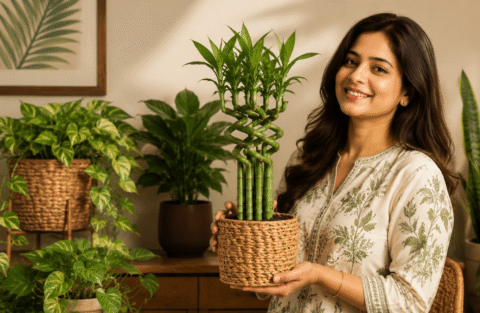
8. Lucky Bamboo — The Vastu-Friendly Summer Survivor
Despite its name, Lucky Bamboo is not actual bamboo — it is Dracaena sanderiana, native to the rainforests of Central Africa. In India, it holds deep cultural significance as a Vastu-friendly plant believed to bring good luck, prosperity, and positive energy into a home. Practically speaking, it is also among the easiest plants to maintain through summer, requiring minimal effort for consistent beauty.
Property | Details |
Botanical Name | Dracaena sanderiana |
Origin | Central Africa |
Light | Low to bright indirect light |
Water | Grown in water — change every 7–10 days in summer |
Ideal Temperature | 16–32°C |
Humidity | Moderate |
Growth Rate | Slow |
Typical Indoor Height | 1–3 feet |
Pet Safety | Toxic to cats and dogs |
Summer Care Tips for India
- Change water every 7–10 days in summer — warm temperatures accelerate bacterial and algae growth significantly
- Use filtered water or allow tap water to sit overnight before use (to let chlorine dissipate)
- Keep in a well-lit spot but away from direct sunlight, which quickly causes leaf yellowing
- Ensure the container remains at least half-full of clean water at all times throughout summer
- Occasional liquid fertilizer (once every 6–8 weeks in summer) promotes healthier, greener growth
📌 Vastu Tip: According to Vastu Shastra, Lucky Bamboo placed in the east or southeast corner promotes health, wealth, and harmonious family relationships. The number of stalks also carries meaning: 3 for happiness, 5 for health, 7 for good fortune, and 21 for general blessings.
9. Boston Fern — The Natural Humidity Machine
The Boston Fern Compacta is one of the most effective natural humidifiers among all indoor plants. Its feathery, cascading fronds are not only visually beautiful but extremely efficient at releasing moisture into the surrounding air — making it particularly valuable in rooms that become excessively dry from heavy AC use during Indian summer.
Property | Details |
Botanical Name | Nephrolepis exaltata ‘Compacta’ |
Origin | Tropical regions of America, Africa, and Polynesia |
Light | Indirect bright to medium light (no direct sun) |
Water | Keep consistently moist (never waterlogged) |
Ideal Temperature | 18–30°C |
Humidity | Very high (thrives in humidity) |
Growth Rate | Moderate |
Typical Indoor Height | 1–2 feet (compact, bushy, spreading) |
Pet Safety | Non-toxic — one of the safest indoor plants for pet owners |
Summer Care Tips for India
- In Kolkata and other coastal Indian cities, Boston Fern thrives on shaded balconies — natural humidity suits it perfectly through summer
- In drier interior cities, mist fronds twice daily in summer, or use a pebble tray filled with water beneath the pot
- Water consistently but ensure excellent drainage — waterlogged soil causes rapid root rot in warm conditions
- Trim brown fronds regularly to maintain a neat appearance and encourage vibrant new growth
- A filtered north or east-facing window provides ideal consistent light for reliable, healthy growth
💡 Expert Tip: Boston Fern in a hanging basket near a shaded bathroom window is a classic combination that works brilliantly in Indian homes — the natural bathroom humidity supports the fern’s growth beautifully while the hanging position shows off its cascading fronds.
10. Aloe Vera — The Medicinal Heat Lover
Aloe Vera needs little introduction in Indian homes. Valued for centuries in Ayurvedic medicine, it is one of the few indoor plants that actively thrives in summer heat while requiring very minimal care. While it does not add humidity like the tropical plants above, it is a reliable air purifier and an invaluable home-remedy resource that earns a permanent place in every Indian household.
Property | Details |
Botanical Name | Aloe barbadensis miller |
Origin | Arabian Peninsula (widely naturalized across India) |
Light | Bright direct to indirect light |
Water | Every 14–21 days in summer — very drought tolerant |
Ideal Temperature | 20–40°C |
Humidity | Low to moderate (drought-tolerant) |
Growth Rate | Slow to moderate |
Typical Indoor Height | 1–2 feet |
Pet Safety | Toxic to cats and dogs |
Summer Care Tips for India
- Aloe Vera actively thrives in Indian summer heat — never move it to a cooler location unnecessarily
- Water deeply but infrequently — every 2–3 weeks is ideal; allow soil to dry completely between watering
- Use a well-draining potting mix — cactus mix or regular soil amended with coarse sand or perlite works best
- The primary enemy of Aloe in Indian summer is overwatering, not heat — always err on the drier side
- Aloe naturally produces ‘pups’ (offshoots) at its base during summer — separate and pot individually for new plants
📌 Did You Know? Aloe Vera gel contains over 75 bioactive compounds including vitamins, minerals, amino acids, and antioxidants. It has been used in Indian homes for sunburn relief, skin care, hair care, and digestive support for thousands of years.
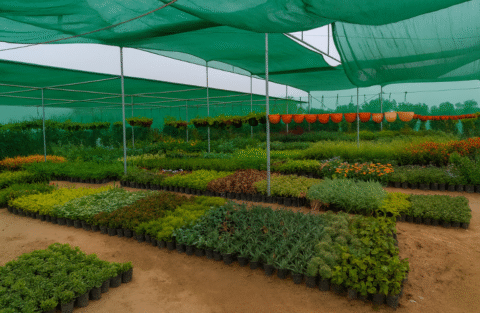
For those with balcony space, Indian summer presents a golden opportunity to create a vibrant outdoor garden. The key is choosing heat-tolerant, sun-loving species that thrive in direct sunlight and occasional dry spells. These are the finest outdoor plant for home options for balcony gardening across Indian cities.
Bougainvillea — The Queen of Summer Balconies
The undisputed queen of Indian summer gardens, Bougainvillea blazes through the hottest months with spectacular continuous colour. Its papery bracts — often mistaken for petals — come in vivid pink, orange, white, red, and yellow, and it blooms most profusely in India’s dry pre-monsoon heat. Extremely drought-tolerant once established, it is the ideal summer season flower plant for south or west-facing Indian balconies.
- Sunlight: Full sun (minimum 6 hours direct sun daily)
- Water: Every 3–4 days in summer; drought tolerant once established
- Best for: South and west-facing balconies; wall-mounted trellises and railings
Hibiscus — The Tropical Summer Bloomer
The Hibiscus (Jaba in Bengali) produces large, vibrant tropical flowers throughout the summer and is highly heat tolerant. Red Hibiscus holds deep cultural significance in West Bengal and across India for devotional offerings, making it both a garden ornament and a meaningful plant for Indian households.
- Sunlight: Full sun to partial shade
- Water: Regular — every 2–3 days in peak summer
- Best for: East, south, and west-facing balconies; containers and grow bags
Arabian Jasmine (Mogra) — The Fragrant Evening Classic
For evening fragrance, nothing rivals Mogra in an Indian summer garden. Its clusters of intensely white flowers emit a legendary perfume that drifts through balconies and verandahs on warm summer evenings. Mogra blooms from April through September in India, covering the entire summer season from start to finish.
- Sunlight: Full sun to partial shade
- Water: Regular — every 2 days in peak summer
- Best for: East and north-facing balconies; near seating areas for evening fragrance experience
Balcony Summer Plant Comparison Table
Plant | Sunlight Need | Blooms? | Water Frequency | Difficulty | Special Feature |
Bougainvillea | Full sun (6+ hrs) | Yes (vivid bracts) | Every 3–4 days | Easy | Drought tolerant; wall climber |
Hibiscus | Full to partial | Yes (large flowers) | Every 2–3 days | Easy | Cultural & devotional significance |
Arabian Jasmine (Mogra) | Full to partial | Yes (fragrant) | Every 2 days | Moderate | Legendary evening fragrance |
Vinca (Nayantara) | Full sun | Yes (continuous) | Every 2–3 days | Very easy | Non-stop summer colour |
Morning Glory | Full sun | Yes (morning) | Every 2 days | Easy | Fast-growing balcony climber |
Jasmine (Jui) | Full to partial | Yes (fragrant) | Every 2 days | Moderate | Classic Bengali garden fragrance |
Summer Flowering Plants in India and West Bengal
India’s summer season hosts some of the most spectacular flowering plants in the botanical world. In West Bengal, the transition from Basanta (spring) to Grishma (summer) brings a celebrated succession of blooms — from the intoxicating scent of Mogra to the vivid crimson of Jaba and the dreamy violet-blue of Aparajita. Here is a complete guide to summer flowers in West Bengal and across India, including the most beloved summer season flowers name list in india.
Plant Name | Local Name (WB) | Flowering Period | Light Requirement | Colour Options |
Bougainvillea | Bougainvillea | March–September | Full sun | Pink, Orange, Red, White, Yellow |
Arabian Jasmine | Mogra | April–September | Full to partial sun | White (intensely fragrant) |
Jasmine | Jui / Juhi | April–August | Full to partial sun | White (fragrant) |
Marvel-of-Peru | Sondhyamalati | May–October | Full sun | Pink, White, Yellow (striped) |
Hibiscus | Jaba | Year-round (peak: summer) | Full to partial sun | Red, Pink, Yellow, White |
Aparajita | Aparajita / Butterfly Pea | May–September | Full to partial sun | Blue-violet, White |
Plumeria | Champa | April–September | Full sun | White, Yellow, Pink |
Vinca | Nayantara | Year-round (peak: summer) | Full sun | Pink, Red, White, Lavender |
Portulaca | Sun Rose / Gauripooja phool | May–September | Full sun | Red, Pink, Yellow, Orange |
Rain Lily | Sefali / Rain Lily | June–August | Partial sun | Pink, White, Yellow |
The summer flowering season in West Bengal officially runs from approximately March through June before the monsoon arrives. However, many species continue blooming well into the monsoon season — making Indian summers one of the longest and most diverse flowering seasons in the entire world.
💡 Expert Tip: The most effective summer garden combination for Kolkata balconies: Bougainvillea for bold colour, Mogra for legendary evening fragrance, and Aparajita for trailing violet-blue blooms. Together they cover ground colour, vertical climbing, and evening sensory experience.
How to Water Indoor Plants During Indian Summer
Watering is the single most important — and most commonly mismanaged — aspect of plant care during Indian summer. Too little and plants wilt; too much and root rot rapidly follows in warm, humid conditions. Getting this balance right is the difference between thriving and struggling plants through the entire season.
Morning vs Evening Watering
The best time to water indoor plants in Indian summer is early morning. Morning watering allows moisture to absorb into the soil before the heat of the day accelerates evaporation. It also ensures leaves dry out during the daytime, reducing fungal risk. Evening watering can leave moisture sitting on leaves and in soil overnight, which encourages mould and root rot — particularly problematic in Kolkata’s already humid summer evenings.
Deep Watering vs Frequent Shallow Watering
The golden rule of summer plant care: water deeply and infrequently rather than shallowly and often. Deep watering encourages roots to grow downward, building a stronger, more resilient root system. Check the top 1–2 inches of soil before watering — if the soil still feels even slightly moist, wait another day or two.
Summer Watering Frequency Guide
Plant | Summer Watering Frequency | Key Notes |
Areca Palm | Every 3–4 days | Allow top 1 inch to dry between waterings |
Snake Plant | Every 10–14 days | Extremely drought tolerant — less is always more |
Peace Lily | Every 2–3 days | Droops when thirsty; check soil before every watering |
Money Plant | Every 3–4 days | Fast-draining soil helps prevent root rot significantly |
Monstera Deliciosa | Every 5–7 days | Allow top 2 inches to dry before next watering |
Syngonium | Every 3–4 days | Keep slightly moist; never let soil become bone-dry |
Aglaonema | Every 4–5 days | Better to underwater than over — tolerates dry periods |
Lucky Bamboo (water) | Change water weekly | Use filtered water; avoid direct sunlight on the vessel |
Boston Fern | Every 2 days | Loves consistent moisture; never allow it to dry out |
Aloe Vera | Every 14–21 days | Drought-tolerant — very little water needed in summer |
Signs of Overwatering vs Underwatering
Signs to Watch | Overwatering | Underwatering |
Leaves | Yellow, limp, mushy at base | Crispy, brown edges, curl inward |
Soil | Waterlogged, smells musty or sour | Bone-dry, shrinking away from pot edges |
Roots | Brown, soft, slimy (root rot) | White and very dry, brittle |
Soil surface | Algae or moss growing on top | Cracked, compacted, and sunken |
Plant weight | Heavier than expected when lifted | Unusually light when picked up |
Protecting Indoor Plants from Summer Heat Waves
Indian summers increasingly include intense heat wave periods that push temperatures well above normal seasonal peaks. During these periods — which the India Meteorological Department defines as temperatures exceeding 45°C in the plains and 37°C in the hills — even heat-tolerant indoor plants need extra attention and care.
Effective Heat Wave Protection Strategies
- Move vulnerable shade-loving plants (Peace Lily, Boston Fern, Syngonium) away from sun-facing windows during the hottest hours
- Close curtains or blinds on south and west-facing windows between 11 AM and 4 PM during active heat waves
- Group plants together — clustered plants create a shared humid microclimate that benefits all the plants involved
- Use wet pebble trays: fill a shallow tray with pebbles, add water to just below the pebble surface, and place pots on top
- Mist heat-sensitive plants (Boston Fern, Syngonium, Peace Lily) in the early morning before heat peaks
- Ensure air circulates between plants without placing any of them in direct AC drafts
- Mulch balcony and outdoor plant containers with dry coconut coir or dry leaves to conserve critical soil moisture
- Water all outdoor and balcony plants deeply every morning throughout an active heat wave period
What to Avoid During Heat Waves
- Avoid fertilizing during extreme heat — plants under heat stress cannot effectively metabolize nutrients at all
- Avoid repotting during peak heat months (April–May) — transplant shock is considerably harder to recover from
- Avoid moving plants suddenly from shade to full sun — acclimatize gradually over 7–10 days
💡 Expert Tip: Dark-coloured plastic pots absorb intense heat in full sun. If outdoor plants in dark pots show heat stress signs, move them to terracotta or light-coloured containers, which maintain significantly cooler root temperatures.
Common Summer Plant Diseases and Pest Control
Indian summer creates ideal conditions for certain plant pests and diseases — particularly the warm-and-humid combination in coastal cities and the dry-heat environment in northern and central India. Recognising problems early is key to effective management before they cause serious plant damage.
Common Summer Pests
Spider Mites
Spider mites thrive in hot, dry air — exactly what happens in AC-cooled rooms with low humidity. They appear as tiny red or brown specks on leaves and produce fine webbing on leaf undersides. Affected leaves develop a characteristic stippled or silvery appearance as cell damage accumulates.
Natural Control: Spray leaves (especially undersides) with a diluted neem oil solution (5ml neem oil + 2ml liquid soap per litre of water) every 7–10 days until resolved. Keeping indoor humidity high actively deters spider mite infestations.
Mealybugs
Mealybugs appear as white, cottony masses in leaf joints and along stems. They weaken plants by extracting sap and excreting sticky honeydew that encourages sooty mould, compounding the damage.
Natural Control: Dab individual infestations with isopropyl alcohol on a cotton swab. Follow up with weekly neem oil spray until fully cleared. Check all new plants carefully before introducing them to your home.
Fungus Gnats
Fungus gnats are small flies that lay eggs in moist soil — more prevalent during pre-monsoon and monsoon months in eastern India. Their larvae damage plant roots, while adult gnats are a persistent household nuisance.
Natural Control: Allow soil to dry between waterings; place yellow sticky traps near affected plants; add a thin sand layer on top of soil to discourage egg-laying. Hydrogen peroxide soil drenches (1 part 3% H₂O₂ to 3 parts water) eliminate larvae effectively.
Common Summer Plant Diseases
- Root Rot: The most common disease in Indian summers — caused by overwatering in warm conditions. Prevention: always use pots with drainage holes and well-draining soil; never water already moist soil.
- Leaf Blight: Brown or black patches with yellow borders, triggered by excessive humidity and poor air circulation. Prevent by ensuring space between plants and avoiding wetting leaves during watering.
- Powdery Mildew: White powdery coating on leaves, more common post-monsoon but starts in humid pre-monsoon periods. Treat with diluted baking soda spray (1 tsp per litre of water with a drop of liquid dish soap).
Signs Your Indoor Plant is Heat Stressed
Recognising heat stress early allows corrective action before permanent damage occurs. Plants communicate stress clearly through their appearance — learning to read these signals is one of the most valuable skills for any indoor gardener in India.
Key Warning Signs of Heat Stress
- Wilting despite moist soil: Plants shut down water uptake when temperatures exceed their comfort range — this differs from drought wilting and requires shade, not more water
- Leaf edges turning brown and crispy: Particularly on the newest growth — caused by excessive heat and critically low humidity
- Leaves curling inward or downward: A protective response to reduce moisture loss through the leaf surface area
- Sudden yellowing of lower leaves: Heat stress causes the plant to sacrifice older leaves to conserve resources for survival
- Flowers dropping prematurely: Flowering plants drop buds and blooms rapidly when temperatures exceed their optimal range
- Rapid soil drying: Significantly faster than normal soil moisture loss, even with regular morning watering
- Stunted or halted new growth: Plants under heat stress redirect all available energy to survival rather than new leaf production
Plant Recovery Steps
- Move the plant to a cooler, shaded location immediately — do not delay
- Water deeply to thoroughly rehydrate the entire root system
- Mist healthy remaining leaves lightly (except succulents like Aloe Vera)
- Remove severely damaged, burnt, or dead leaves to help the plant focus energy
- Place in a bright but well-shaded location for at least one full week
- Resume normal fertilization only after clear signs of recovery are visible (typically 3–4 weeks)
Monthly Summer Care Calendar for Indoor Plants
Month | Key Care Tasks for Indian Homes |
March | Gradually increase watering frequency; start monthly liquid fertilization; repot root-bound plants before heat peaks; begin inspecting for early-season pests and mites |
April | Shift shade-loving plants (Peace Lily, Ferns) away from south and west windows; begin daily misting for humidity-lovers; check all plants for spider mites as dry heat begins |
May | Peak heat care — prioritize deep morning watering; set up pebble trays for AC-exposed plants; suspend fertilization if temperatures regularly exceed 40°C; shade outdoor balcony plants with net |
June | Early monsoon arrives in eastern India — reduce outdoor watering immediately; increase ventilation; begin monitoring for fungal diseases; excellent month for cuttings and propagation |
July | Peak monsoon — greatly reduce all watering; check soil drainage actively; treat fungal issues early; continue propagation as humidity supports rooting; remove damaged foliage regularly |
August | Late monsoon; begin light liquid fertilization as conditions moderate; groom plants for the coming festival season (Durga Puja, Diwali) with fresh potting, pruning, and repotting |
Summer Indoor Plant Care Checklist
Use this checklist to ensure your indoor plants receive complete and timely care through every month of the Indian summer season:
- Always check soil moisture before watering — never water soil that is still moist
- Water in the early morning, not late afternoon or evening
- Wipe dusty plant leaves with a damp cloth once a month to keep pores clear
- Inspect leaf undersides for pests (especially spider mites) every 2 weeks
- Mist humidity-loving plants daily in heavily AC-cooled rooms
- Move shade-loving plants away from intense afternoon sun (especially May–June)
- Apply balanced liquid fertilizer once a month (except during extreme heat waves)
- Remove dead, yellowing, or damaged leaves promptly to prevent disease spread
- Ensure all pots have working drainage holes — check that holes are not blocked by roots
- Rotate plants every 2–4 weeks for even, balanced light exposure on all sides
- Check water levels in water-grown plants (Lucky Bamboo, water-jar Money Plant) weekly
- Place a pebble tray filled with water beneath humidity-loving plants positioned near AC units
Frequently Asked Questions
Plants like Snake Plant, Areca Palm, Aglaonema, Syngonium, Money Plant, and Aloe Vera handle Indian summer conditions exceptionally well. These species either originate from tropical climates similar to India’s or have adapted to cope with warm temperatures, inconsistent watering, and varying humidity. They perform equally well in AC-cooled apartments and naturally ventilated Indian homes across all seasons.
Yes, within practical limits. Plants reduce perceived temperature through transpiration — releasing water vapour that makes surrounding air feel cooler and more comfortable. Rooms with multiple actively growing plants can feel 2–4°C cooler without mechanical cooling. They complement air conditioning by improving both comfort and air quality, rather than replacing it in extreme Indian heat conditions.
Areca Palm, Boston Fern, Peace Lily, and Monstera Deliciosa are among the most effective cooling plants because of their large leaf surface areas and high transpiration output. Grouping several of these together in one room amplifies the effect, as clustered plants create a shared humid microclimate that is noticeably more comfortable than sparsely planted rooms.
The most spectacular summer flowering plants in India include Bougainvillea, Hibiscus, Arabian Jasmine (Mogra), Jasmine (Jui), Marvel-of-Peru (Sondhyamalati), Aparajita, Plumeria (Champa), and Vinca (Nayantara). Most are ideal for balconies and outdoor gardens; Mogra and Jasmine can also be grown beautifully in pots on Indian verandahs and terrace gardens.
Frequency depends entirely on the plant type. Drought-tolerant plants (Aloe Vera, Snake Plant) need water every 10–21 days. Tropical and humidity-loving plants (Peace Lily, Boston Fern, Syngonium) need watering every 2–4 days. The most reliable approach: check soil moisture before every single watering. Water when the top 1–2 inches feel dry to the touch.
Yes, Peace Lily thrives in India’s warm, humid summers when kept indoors with indirect light. Being tropical in origin, it genuinely appreciates warmth. The main challenges are direct sunlight (which scorches leaves) and the dry air from air conditioning (which causes tip browning). Keep it away from harsh sun and AC vents, water regularly, and it will reward you with beautiful white blooms through the hottest months.
Bougainvillea is the top choice for full-sun balconies in Indian summer — it thrives on heat and produces spectacular continuous colour. For partial shade balconies, Hibiscus, Mogra, or Syngonium work beautifully. A well-balanced combination of Bougainvillea for colour, Mogra for fragrance, and a trailing Money Plant for lush greenery creates a complete and sensory summer balcony garden.
Kolkata’s summer combines extreme heat (38–42°C) with high humidity — conditions that many tropical plants actually thrive in. Excellent choices include Areca Palm, Peace Lily, Syngonium, Money Plant, Aglaonema, Lucky Bamboo, Mogra, Hibiscus, and Bougainvillea. The monsoon that follows Kolkata’s peak heat season supports vigorous recovery and growth for all these species.
No plant survives in total darkness, but several thrive in very low-light conditions. The best choices are Snake Plant, Lucky Bamboo, Peace Lily, Aglaonema, and Syngonium. These are the closest thing to genuine indoor plants without sunlight — thriving in north-facing apartments with minimal natural light. They still need some ambient natural light; avoid completely dark rooms with zero daylight.
Yes, with some basic precautions. Avoid placing plants directly in front of AC vents — the cold, dry blast causes leaf tip browning, accelerated water loss, and general plant stress. Position plants at least 4–6 feet away from AC vents, within the ambient cooled air. Use a pebble tray filled with water beneath pots to compensate for humidity that AC continuously removes.
The most effective air purifiers for Indian homes based on available research include Peace Lily (removes formaldehyde, benzene, and ammonia), Snake Plant (efficient CO₂/O₂ exchange through night), Areca Palm (combines air purification with significant humidification), and Syngonium (removes multiple VOCs). For meaningful benefit, place at least one medium-to-large plant per room.
Absolutely. Monstera comes from tropical Central American forests and genuinely loves the warmth and humidity that Indian homes provide in summer. The warm temperatures significantly accelerate its growth rate and leaf production. Keep it in bright indirect light, water when the top few inches of soil dry out, and support it with a moss pole. It will grow dramatically through Indian summer months.
Prevention is much simpler than treatment. Always use pots with drainage holes. Choose well-draining soil mixes (add perlite or coarse sand to standard potting soil). Never water soil that is still moist. Ensure pots are never sitting in water-filled saucers for extended periods. If root rot is discovered, trim affected roots, treat with cinnamon powder or diluted fungicide, and repot immediately in fresh dry soil.
Terracotta pots are excellent for Indian summer — their porous material allows excess moisture to evaporate through the walls, significantly reducing root rot risk. For outdoor summer plants, terracotta’s weight also provides stability against summer winds. For consistently moisture-loving plants (Boston Fern, Peace Lily), glazed ceramic pots retain moisture better and are more suitable choices.
Use a fine-mist spray bottle and apply a light mist to leaf surfaces (especially undersides) in the early morning. Avoid late-night misting, which keeps leaves wet too long and actively encourages fungal diseases. For humidity-loving plants in dry rooms, a pebble tray filled with water beneath the pot provides continuous gentle humidification without any overwatering risk.
Pet-safe indoor plants ideal for Indian summer include Areca Palm (non-toxic to cats and dogs), Boston Fern (non-toxic), Spider Plant, and Bamboo Palm. Bougainvillea is generally considered non-toxic though its thorns present a physical hazard. Always verify specific plant toxicity before introducing any new species to a home with cats, dogs, or other pets.
This is a genuine challenge. Most succulents and cacti prefer arid conditions and can struggle in Kolkata’s pre-monsoon and monsoon humidity. Aloe Vera is the most humidity-tolerant succulent for Kolkata. Other succulents (Jade Plant, Haworthia) can survive but require excellent drainage and significantly reduced watering through the wet months to consistently avoid root rot.
Act quickly. Move the plant to a cooler, shaded location immediately. Water deeply to rehydrate the root system. Remove any burnt or dead leaves to redirect plant energy. Mist healthy remaining leaves lightly (not succulents). Avoid fertilizing while the plant remains stressed — it cannot process nutrients effectively in this state. Allow 2–4 weeks of gentle recovery care before resuming a normal growing routine.
Indian offices typically have consistent AC, moderate to low light, and require minimal-care plants tolerating irregular watering schedules. The best office summer plants are Snake Plant, Aglaonema, Lucky Bamboo, Peace Lily, and Syngonium. These need very little attention, tolerate AC room conditions extremely well, and add a calming green presence to desk corners and reception areas throughout the year.
Yes — summer is the active growing season for most tropical indoor plants, making it the right time for regular feeding. Use balanced liquid fertilizer (NPK 10-10-10 or 20-20-20) every 3–4 weeks from March through early June. Reduce or stop fertilizing if temperatures regularly exceed 40°C, as plants under severe heat stress cannot effectively metabolize nutrients. Resume when temperatures moderate or monsoon arrives.
East-facing windows provide gentle morning sun followed by afternoon shade — an ideal combination for most tropical houseplants. Monstera Deliciosa, Peace Lily, Syngonium, Aglaonema, and Money Plant all thrive beautifully in east-facing window positions. This makes east-facing rooms among the most plant-friendly orientations in Indian apartments for year-round growing success.
South-facing balconies receive the most intense direct sunlight and heat in India. Choose only sun-loving, heat-tolerant plants: Bougainvillea, Hibiscus, Portulaca, Vinca, and Aloe Vera. Use large pots to buffer root heat; light-coloured or terracotta containers reduce soil temperature significantly. Water daily in the morning. A 50% shade net dramatically extends the range of plants that can comfortably grow there.
You can, with care. Avoid positioning plants directly in the cold draft from AC vents — the dry, cold air stream causes leaf tip browning, dehydration, and plant stress. Position plants at least 4–6 feet from AC vents, where they receive the ambient cooled air rather than the direct blast. This provides stable comfortable temperatures without the desiccating airflow that harms tropical plants.
For Indian bedrooms in summer, choose plants that release oxygen at night or have calming qualities: Snake Plant (releases oxygen at night via CAM photosynthesis), Peace Lily (air purifying with a calming white aesthetic), and Aloe Vera (oxygen at night plus immediate medicinal value). Keep bedroom plants near a window in a well-lit position to ensure healthy daytime photosynthesis throughout the year.
A general horticultural guideline suggests one medium-to-large plant (or two smaller ones) per 10 square metres of floor space for meaningful air quality improvement. In an average Indian bedroom of 100–150 square feet, 2–4 plants provide both aesthetic and air quality benefits. For maximum transpirational cooling in a large living room, 6–8 grouped plants produce results noticeably better than single scattered plants.
Expert Conclusion
After a long, demanding Indian summer, a thoughtfully cultivated indoor garden feels like a quiet personal victory — proof that with a few well-chosen plants and some consistent seasonal care, even the most concrete-surrounded urban apartment can become a genuinely fresh, living, and calming space.
The ten indoor summer plants covered in this guide — from the air-humidifying Areca Palm and the night-purifying Snake Plant to the elegant Peace Lily and the culturally beloved Money Plant — offer a complete spectrum of solutions for different Indian home environments, light conditions, and care philosophies. No matter what your living situation, budget, or experience level, there is an ideal indoor summer plant for you.
The most important insight from this guide: summer is not a barrier to indoor plant growing in India — it is the peak growing season for most tropical species. The warmth that makes us reach for the AC is exactly the condition these plants evolved to thrive in. With proper watering discipline, smart light placement, and basic seasonal pest awareness, your plants will grow faster, look more vibrant, and serve their air-purifying purpose more effectively in summer than at any other time of year.
Start small if you are new to indoor plants — one Snake Plant for a bedroom corner, one Money Plant on a shelf, or one Peace Lily for the living room creates a meaningful difference in atmosphere before you have invested significant time or money. The learning curve is gentle, the rewards are immediate, and the habit, once formed, grows naturally into something richer and more rewarding with every season.
For anyone ready to begin their indoor plant journey or expand an existing collection with the best possible plants for Indian conditions, online shopping for indoor plants has never been more accessible or reliable. Plantaeroot has been helping Indian plant lovers bring nature home since 2014 — delivering carefully packed, healthy plants to every corner of India, and making indoor gardening genuinely effortless.
Ready to begin? Explore the full range and buy online nursery plants — from air-purifying indoor staples to vibrant summer flowering varieties — and discover how simple and rewarding it is to bring a little more nature into your Indian home this summer.
Key Takeaways from This Guide
|